
The Mask: A Field Guide
You will wear a mask as you enter. You can remove it at your discretion.
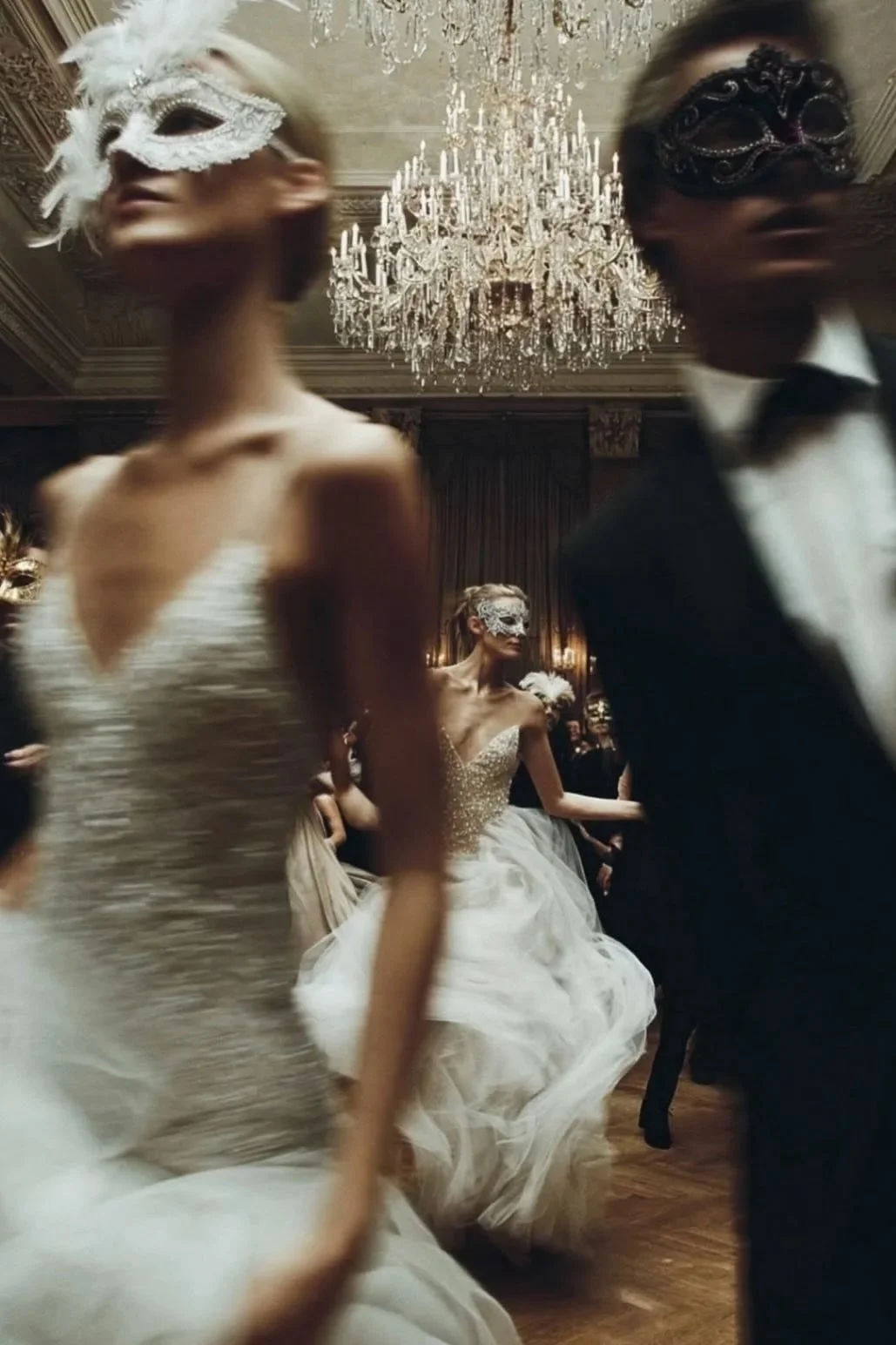
The mask is the oldest trick in the human repertoire: subtract the face, and the self becomes negotiable. Venice understood this five centuries ago. We simply continue the tradition, with better lighting.
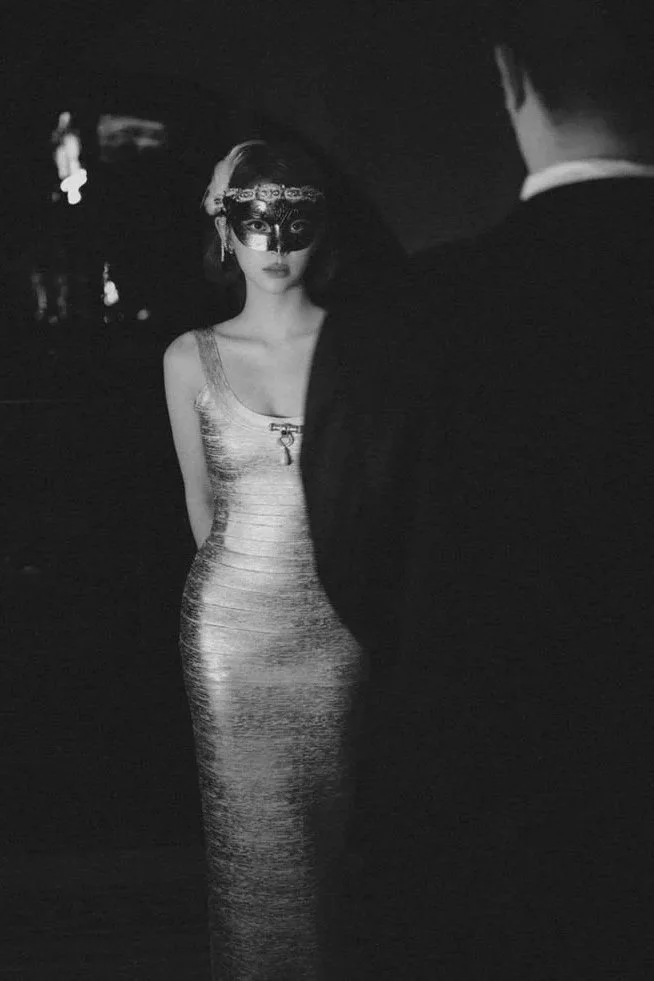
The forms worth knowing. The Colombina covers the eyes and cheekbones and leaves the mouth free — the most practical choice for an evening of conversation, drinking, and whatever follows. The Volto covers the whole face and is striking for an entrance, less so for a glass of champagne; consider it for arrival, then trade down. The Filigree metal mask — laser-cut, lace-like — is the modern favorite: weightless, beautiful, and it photographs like jewelry, though at VLVT no one is photographing you.
How to choose: try it on for twenty minutes, not twenty seconds. Check that it does not press the bridge of your nose, that you can drink without performing surgery, and that the ribbon or band survives a hairstyle. Gentlemen with beards: the Colombina, always. Ladies: secure it with bobby pins through the ribbon loops, anchored under the hair — the ribbon alone surrenders by ten o’clock.
What your mask is not: a costume. We are not a masquerade party in the rented sense. The mask is a tool of permission, worn with the same seriousness as the tuxedo. Black, bone white, deep metallics, oxblood. Leave the feathers and sequins to other evenings.
Suggested Resources
Ca’ Macana, Venice — original Venetian workshop; ships worldwide; the mask-maker for Eyes Wide Shut.
Etsy artisans — search ‘filigree metal masquerade mask’; order a month ahead for fit and shipping.
Fit advice — wear it at home for an hour before the night; adjust ribbons, add pins.
Internal link — Read our other blog post: “What to Wear When No One Knows Your Name”